Informações:


Sinopse
Stereo Chemistry is chemistry news told by the people making it. C&EN is the news magazine of the American Chemical Society.
Episódios
-
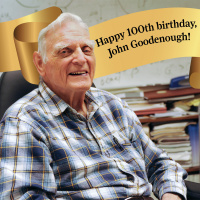
![Bonus: For John Goodenough’s 100th birthday, we revisit a fan-favorite interview with the renowned scientist]()
Bonus: For John Goodenough’s 100th birthday, we revisit a fan-favorite interview with the renowned scientist
25/07/2022 Duração: 38minFamed lithium-ion-battery pioneer and Nobel Prize–winner John Goodenough has achieved yet another milestone—a century on Earth. Goodenough celebrates his 100th birthday on July 25, 2022. In honor of the occasion, Stereo Chemistry host Kerri Jansen and C&EN reporter Mitch Jacoby revisit their 2019 interview with the renowned scientist, recorded at his office at the University of Texas at Austin just prior to his Nobel win. In the expansive and candid conversation, Goodenough tells Stereo Chemistry about childhood adventures, infernal exams with Enrico Fermi, and his path to the innovation that enabled an electronics revolution. A transcript of this episode is available at bit.ly/3otFrh3. Music credit: “Happy Birthday To You (Orchestral)” by beanstalkaudio/Pond5.com Image credit: Mitch Jacoby/Robert Bryson/C&EN/Milano M/Shutterstock
-
![Bonus: Jess Wade on Wikipedia and work-life balance]()
Bonus: Jess Wade on Wikipedia and work-life balance
21/06/2022 Duração: 55minThis month, Stereo Chemistry is sharing an episode of the podcast ChemConvos featuring an interview with materials scientist, self-described “Raman spectroscopy enthusiast,” and prolific Wikipedia editor Jess Wade. On ChemConvos, hosts Henry Powell-Davies and Medina Afandiyeva seek to uncover the story behind the scientist. In this episode, the trio discusses not only Jess’s work as a research fellow at Imperial College London but also how she manages burnout and the importance of a supportive lab culture. And, of course, they dig into the origins of her Wikipedia project, which has resulted in Wade creating more than 1,400 biographies on Wikipedia aiming to highlight women, people of color, and LGBTQ+ scientists and engineers. Follow ChemConvos on Twitter at @ChemConvosPod. Find new episodes at anchor.fm/chemconvospod or on your favorite podcast platform. A transcript of this episode is available at bit.ly/3yb4lb8. Image credit: Courtesy of ChemConvos/C&EN
-
![Bonus: The sticky science of why we eat so much sugar]()
Bonus: The sticky science of why we eat so much sugar
31/05/2022 Duração: 34minOur bodies need sugar to survive. But most of us consume way more than we actually need, and many foods and beverages pack a dose of added sweeteners. So why are we eating all of this extra sugar? This month, Stereo Chemistry is sharing an episode of the podcast Tiny Matters that examines that question. In the episode, hosts Sam Jones and Deboki Chakravarti explore sugar’s impact on our bodies and trace how a genetic mutation that helped our distant ancestors survive is influencing our health today. And they dig into the debate around whether sugar can fairly be called addictive. Note: This episode contains discussion of addiction and eating disorders. Listen to Tiny Matters on the American Chemical Society’s website at https://www.acs.org/content/acs/en/pressroom/tiny-matters.html or on your favorite podcast platform. ACS also publishes Chemical & Engineering News, which is the independent news outlet that powers Stereo Chemistry. More on sugar from C&EN: The sugar wars are about to change your food
-
![Bonus: There’s more to James Harris’s story]()
Bonus: There’s more to James Harris’s story
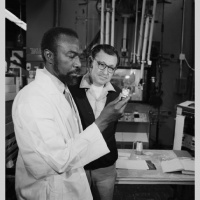
27/04/2022 Duração: 45minChemists may know James Harris as the first Black scientist to be credited with codiscovering an element. In fact, we referenced this in a previous episode of Stereo Chemistry about making superheavy elements. But beyond this memorable factoid, details about the accomplished nuclear chemist are scarce, and most sources repeat the same superficial information. Kristen Frederick-Frost, curator of modern science at the Smithsonian’s National Museum of American History, wants to change that. After discovering that the museum's database lacked material on Harris, she scoured archival records and sought out former colleagues, friends, and family members to fill in details of his life and career. In this bonus episode of Stereo Chemistry, host Kerri Jansen and special guest Dr. Darryl Boyd join Frederick-Frost to explore James Harris’s story beyond the discoveries that made him famous. And we even get an unexpected peek into his lab, courtesy of the US National Archives. Boyd, a polymer chemist, previously research
-
![Bonus: The helium shortage that wasn’t supposed to be]()
Bonus: The helium shortage that wasn’t supposed to be
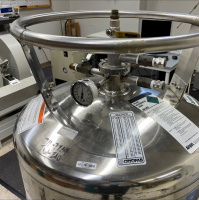
24/03/2022 Duração: 14minHelium shortages can derail research and threaten expensive instruments that depend on the gas to operate safely. In late 2020, analysts predicted—and we reported—that pressures on the global helium market were likely to ease as new production capacity came online. Today, helium users are again facing price spikes and limited supplies, driven by a variety of factors including political instability in Europe and technical malfunctions at key suppliers. In this bonus episode of Stereo Chemistry, C&EN industrial gas reporter Craig Bettenhausen explains how we ended up here again and how the outlook for the global helium market has evolved. A transcript of this episode is available at bit.ly/3tBSGzF. For more background about where helium comes from, why it's so important to science, and what happens when you can't get enough of it, check out our October 2020 podcast episode, How helium shortages have changed science. Image credit: Boris Steinberg, Johns Hopkins Chemistry Music credit: “How Did I Get Her
-
![Sarah Reisman and Melanie Sanford on how organic chemistry is changing and how they’ve learned to choose priorities]()
Sarah Reisman and Melanie Sanford on how organic chemistry is changing and how they’ve learned to choose priorities
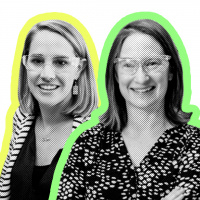
15/02/2022 Duração: 23minBeing a chemistry professor is a juggling act. But sometimes professors have too many balls in the air. How do they know which ones to grab and which to let drop? In this episode of Stereo Chemistry, C&EN's Leigh Krietsch Boerner sits down with organic chemists Sarah Reisman and Melanie Sanford to hear how they decide what projects to work on, what sparks joy for them in the lab, and what being an organic chemist really means to them. A transcript of this episode will be available soon at cen.acs.org. Sign up for C&EN’s Selling Your Science: The Art of Science Communication at cenm.ag/sciencecommunication. Contact Stereo Chemistry by emailing cenfeedback@acs.org. Image credit: Will Ludwig/C&EN/Lance Hayashida/University of Michigan
-
![Jose-Luis Jimenez and Kimberly Prather on the intersection of aerosol science and the COVID-19 pandemic]()
Jose-Luis Jimenez and Kimberly Prather on the intersection of aerosol science and the COVID-19 pandemic
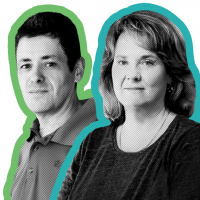
18/01/2022 Duração: 25minImagine you’re an atmospheric chemist. There’s a pandemic. And public health officials release information about how the virus spreads from one person to another—information that directly contradicts your knowledge of how tiny particles move in the air. What do you do? In this episode of Stereo Chemistry, Jose-Luis Jimenez and Kimberly Prather talk to C&EN editor Jyllian Kemsley about how they’ve handled that situation over the past 2 years. They share their frustrations with public health officials along with the heartbreak and rewards of communicating science with the general public, and what they plan to take from their experiences as they think about their research going forward. A transcript of this episode is available at bit.ly/3rzzCzI. Sign up for C&EN’s Selling Your Science: The Art of Science Communication at cenm.ag/sciencecommunication. Contact Stereo Chemistry: cenfeedback@acs.org Image credit: Will Ludwig/C&EN/Mariana Pereira (Jimenez)/Erik Jepsen/University of California San Diego
-
![Jessica Ray and William Tarpeh on clean water, turning trash into treasure, and life as assistant professors]()
Jessica Ray and William Tarpeh on clean water, turning trash into treasure, and life as assistant professors
21/12/2021 Duração: 27minHow do we build water systems that are sustainable and also equitable? On this episode of Stereo Chemistry, Jessica Ray and William Tarpeh talk with C&EN reporter Katherine Bourzac about how they use their chemical engineering know-how to develop simple systems for filtering toxic chemicals from our water and harvesting useful chemicals from urine. They also discuss finding ways to thrive as assistant professors and building support networks as Black junior faculty. A transcript of this episode is available at https://bit.ly/3pggyGU. Sign up for C&EN’s weekly newsletter at bit.ly/chemnewsletter. Contact us: cenfeedback@acs.org Image credit: Will Ludwig/C&EN/University of Washington/Courtesy of William Tarpeh
-
![David Liu and Stuart Schreiber on the science that motivates, fascinates, and tells us who we are]()
David Liu and Stuart Schreiber on the science that motivates, fascinates, and tells us who we are
23/11/2021 Duração: 33minWhat motivates a creative scientific mind? How does an accomplished scientist pinpoint new subjects to explore? How is the field of chemical biology evolving? In this episode of Stereo Chemistry, we probe those questions with scientists and serial entrepreneurs David Liu and Stuart Schreiber, both pioneers in developing tools that use chemistry to explore biology. A transcript of this episode and links to past C&EN coverage of David Liu and Stuart Schreiber will be available soon at cen.acs.org. Read Stuart Schreiber’s Harvard Magazine article about discovering his family’s secrets at https://www.harvardmagazine.com/2019/07/dna-testing-schreiber Sign up for C&EN’s weekly newsletter at bit.ly/chemnewsletter. Image credit: Will Ludwig/C&EN/Beam Therapeutics/Stuart Schreiber
-
![Preview: New season coming on Nov. 23]()
Preview: New season coming on Nov. 23
26/10/2021 Duração: 05minStereo Chemistry’s new season will launch on Nov. 23, featuring eight chemistry greats in conversation with . . . each other. In each episode, two sensational chemists will pair up for in-depth conversations moderated by a C&EN reporter. Listen now as show host Kerri Jansen reveals the lineup with new Stereo Chemistry team member Attabey Rodríguez Benítez. Image credit: C&EN/Shutterstock Want to contact Stereo Chemistry? Email cenfeedback@acs.org
-
![BONUS: Molecule-building tool wins Nobel Prize in Chemistry]()
BONUS: Molecule-building tool wins Nobel Prize in Chemistry
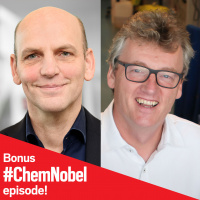
06/10/2021 Duração: 07minThe 2021 Nobel Prize in Chemistry went to Benjamin List and David W. C. MacMillan for their development of asymmetric organocatalysis, which has proved to be a powerful tool for building molecules. In this special episode of Stereo Chemistry, host Kerri Jansen, C&EN reporter Leigh Krietsch Boerner, and C&EN editorial fellow Emily Harwitz delve into the science behind the prize. Merck’s Rebecca Ruck also joins the Stereo Chemistry crew to weigh in on how organocatalysis has impacted drug development. An edited transcript of this episode is available at bit.ly/2WOGCNR. Read more about the 2021 Nobel Prize in Chemistry in Leigh Krietsch Boerner’s article on the prize at bit.ly/3iD0hs2. Image credit: © Frank Vinken (List); Princeton University, Department of Chemistry, © Todd Reichart (MacMillan)
-
![BONUS: Astronaut Leland Melvin’s journey from chemistry to the cosmos]()
BONUS: Astronaut Leland Melvin’s journey from chemistry to the cosmos
21/09/2021 Duração: 37minThis month, Stereo Chemistry is sharing an episode of Third Pod from the Sun, a podcast from the American Geophysical Union, featuring an interview with retired astronaut and former professional athlete Leland Melvin. In the episode, Melvin describes how an early—and explosive—interest in chemistry grew into a scientific career at NASA and two missions to the International Space Station. Find more stories from Third Pod from the Sun at thirdpodfromthesun.com, Apple podcasts, and wherever you get podcasts. Image credit: Courtesy of Third Pod from the Sun/C&EN
-
![BONUS: How body farms can help solve cases]()
BONUS: How body farms can help solve cases
24/08/2021 Duração: 23minThis month, Stereo Chemistry is sharing an episode of Orbitals that features an interview with forensic chemist Shari Forbes, an expert in human decomposition who studies the odors of decomposition at a body farm in chilly Quebec. Research at body farms—research facilities dedicated to studying what happens to human bodies after death—supplies law enforcement with valuable information about the process of decomposition in various scenarios. A transcript of this episode is available at bit.ly/3jdvLFN. Find more stories from Orbitals on the American Chemical Society’s website, acs.org, or wherever you listen to podcasts. Image credit: Courtesy of Orbitals/C&EN
-
![BONUS: Rare earths’ magic comes at a cost (Part 2)]()
BONUS: Rare earths’ magic comes at a cost (Part 2)
27/07/2021 Duração: 33min(Part 2/2) This month, Stereo Chemistry is sharing a pair of episodes from Distillations, a podcast from the Science History Institute. We rely on rare-earth elements to make many essential technologies like smartphones, medical imaging devices, and wind turbines. But how much do you know about where these extraordinary materials come from? In this two-part series, Distillations hosts Alexis Pedrick and Elisabeth Berry Drago explore the source of rare earths’ “magic,” the costs of acquiring these elements and what scientists are doing to try to find a way to produce them sustainably. A transcript of this episode is available at https://bit.ly/373odhN. Find more stories from Distillations at Distillations.org. Image credit: Courtesy of Distillations/C&EN
-
![BONUS: Rare earths’ magic comes at a cost (Part 1)]()
BONUS: Rare earths’ magic comes at a cost (Part 1)
27/07/2021 Duração: 27min(Part 1/2) This month, Stereo Chemistry is sharing a pair of episodes from Distillations, a podcast from the Science History Institute. We rely on rare-earth elements to make many essential technologies like smartphones, medical imaging devices, and wind turbines. But how much do you know about where these extraordinary materials come from? In this two-part series, Distillations hosts Alexis Pedrick and Elisabeth Berry Drago explore the source of rare earths’ “magic,” the costs of acquiring these elements and what scientists are doing to try to find a way to produce them sustainably. A transcript of this episode is available at https://bit.ly/373odhN. Find more stories from Distillations at Distillations.org. Image credit: Courtesy of Distillations/C&EN
-
![BONUS: Celebrating LGBTQ+ excellence with My Fave Queer Chemist]()
BONUS: Celebrating LGBTQ+ excellence with My Fave Queer Chemist
29/06/2021 Duração: 48minThis month, we’re sharing an episode of the podcast My Fave Queer Chemist. Hosted by graduate students Bec Roldan and Geraldo Duran-Camacho, the show celebrates the excellence of LGBTQ+ chemists everywhere. Stereo Chemistry is excited to share this recent episode featuring inorganic photochemist Irving Rettig. In the episode, Rettig discusses his background in art conservation, his experiences finding support and community in grad school, and his work promoting transgender-inclusive name change policies within academic publishing. Note: This episode includes the use of slang terms for some members of the LGBTQ+ community. A transcript of this episode is available at bit.ly/3624azW. Follow My Fave Queer Chemist on Twitter at @MFQCPod. Find new episodes at anchor.fm/mfqc. Read C&EN’s article "LGBTQ+ Chemists You Should Know About" at cenm.ag/historiclqbtq. Image credit: My Fave Queer Chemist/Will Ludwig/Yang Ku/C&EN
-
![Ep. 41: Searching for Mars’s missing water]()
Ep. 41: Searching for Mars’s missing water
25/05/2021 Duração: 22minMore than 50 years of missions to Mars paint a clear picture of a cold, dry, desert planet. And at the same time, photographs, minerals, and other data tell scientists that Mars once had as much water as Earth, or even more. Why are the two planets so different today? In this episode of Stereo Chemistry, we talk to scientists about the latest research on Mars’s water and where they think the water went. Listen to the end of the episode for an announcement about the future of Stereo Chemistry. Sign up for C&EN’s newsletter at bit.ly/chemnewsletter. A transcript for this episode is available at bit.ly/3hPfHcP. Image credit: Kevin Gill/Flickr based on data from NASA/JPL/University of Arizona/USGS
-
![Ep. 40: Reducing toxic metals in food]()
Ep. 40: Reducing toxic metals in food
20/04/2021 Duração: 31minToxic elements like lead, arsenic, mercury, and cadmium in food are not a new problem. But when they show up in pureed vegetables and other foods intended for babies, alarm bells go off. That’s what happened in recent months following a bombshell congressional report that found neurotoxic metals in baby food from multiple manufacturers. In this episode of Stereo Chemistry, host Kerri Jansen and C&EN reporter Britt Erickson explore the fallout from that report and renewed efforts by baby food manufacturers, regulators, advocacy groups, and agricultural scientists to rein in the problem. Subscribe to Stereo Chemistry now on Apple Podcasts, Spotify, or wherever you get your podcasts. Instructions for adding Chemistry Update to your smart speaker are available at cenm.ag/chemistryupdate. An edited transcript of this episode is available at bit.ly/32JQhox. Image credit: Ollinka/Shutterstock
-
![Ep. 39: How research on aging could keep us healthier longer]()
Ep. 39: How research on aging could keep us healthier longer
23/03/2021 Duração: 28minLiving longer has been a human obsession for centuries, but while medical science has helped extend average life span, not all those extra years can be healthy. It turns out that aging is a major risk factor for disease. Follow along as host Kerri Jansen and reporter Laura Howes ask if instead of extending life span, we could extend health span and how modern science could make that a reality. An edited transcript of this episode is available at bit.ly/2NKNZkV. Help us shape the future of Stereo Chemistry by taking the survey at bit.ly/StereoChemSurvey. Image credit: Yang H. Ku/C&EN
-
![Ep. 38: Nobel laureates Frances Arnold and Jennifer Doudna on prizes, pandemics, and Jimmy Page]()
Ep. 38: Nobel laureates Frances Arnold and Jennifer Doudna on prizes, pandemics, and Jimmy Page
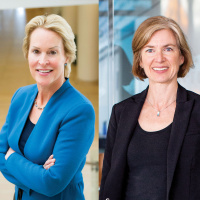
16/02/2021 Duração: 30minWhere do you take your career after you’ve won all of science’s biggest prizes? In this episode of Stereo Chemistry, C&EN executive editor Lisa Jarvis sits down with Nobel laureates Frances Arnold and Jennifer Doudna to hear about whether their career goals changed after they got that early-morning phone call in October and how the pandemic has shifted the way they approach their work. A script of this episode is available at bit.ly/3u7jCW7. Sign up for C&EN's newsletter at cenm.ag/chemnewsletter. Catch up on last year's package of trailblazing women chemists, edited by Jennifer Doudna, at cenm.ag/2020trailblazers. Image credit: Caltech (Arnold)/Laura Morton Photography (Doudna)