Informações:


Sinopse
Stereo Chemistry is chemistry news told by the people making it. C&EN is the news magazine of the American Chemical Society.
Episódios
-
![CEN Uncovered: Solvent Waste Levels, EPA Regulations, and Disposal]()
C&EN Uncovered: Solvent Waste Levels, EPA Regulations, and Disposal
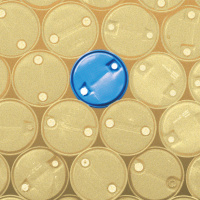
30/08/2024 Duração: 20minOn average, from 2011 to 2021, academic labs generated around 4,300 metric tons of hazardous waste each year. One of the largest lab-used solvents discarded is dichloromethane and more than half of that waste ends up burned. In today’s episode, policy reporters Krystal Vasquez and Leigh Krietsch Boerner dive into the processes academic labs use to dispose of said waste, the consequences of new EPA regulations around dichloromethane, and what solutions academic institutions are coming up with to accommodate these new rules. C&EN Uncovered, a project from C&EN’s podcast, Stereo Chemistry, offers a deeper look at subjects from recent stories. Check out Krystal’s story on the new U.S. Environmental Protection Agency regulations regarding dichloromethane at https://cenm.ag/dcmregs and check out Leigh’s story about solvent waste disposal in academic laboratories at https://cenm.ag/wastedisposal. Cover photo: Lab solvents C&EN July 15th cover photo Subscribe to Stereo Chemistry now on Apple Podcasts, Spo
-
![CEN Uncovered: Ongoing tragedies in Flint and East Palestine]()
C&EN Uncovered: Ongoing tragedies in Flint and East Palestine
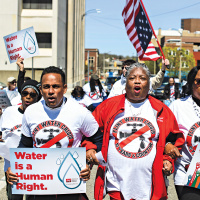
19/07/2024 Duração: 18minTragedies in the communities of Flint, Michigan, and East Palestine, Ohio, continue to affect residents 10 years and 1 year on, respectively, from the initial events. Residents of both cities continue to rebound and rebuild despite ongoing issues revolving around the toxic chemicals that were introduced to their towns through human decisions. C&EN physical sciences reporter Priyanka Runwal traveled to both Flint and East Palestine to speak with residents about how they are recovering, how the actions of their representatives have fallen short, and their hopes to return to something of a “normal” existence in the future. C&EN Uncovered, a project from C&EN’s podcast, Stereo Chemistry, offers a deeper look at subjects from recent stories. Check out Priyanka’s cover story on Flint after 10 years at cenm.ag/flint; Check out Priyanka’s cover story on East Palestine at cenm.ag/eastpalestine Cover photo: Residents of Flint, Michigan, march arm in arm as they demand justice and accountability for their
-
![Can ‘forever chemicals’ be destroyed?]()
Can ‘forever chemicals’ be destroyed?
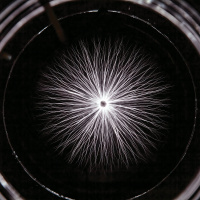
17/05/2024 Duração: 19minPer- and polyfluoroalkyl substances, a class of chemicals known as PFAS, are often called “forever chemicals” because of how long they persist in the environment. They are prevalent in drinking water and have been linked to negative health outcomes. A slew of cleantech start-ups are cropping up with the aim of breaking down and destroying PFAS molecules. In this episode of C&EN Uncovered, reporter Britt Erickson explores the technologies behind these companies and the competition among them. C&EN Uncovered, a project from C&EN’s podcast, Stereo Chemistry, offers a deeper look at subjects from recent stories. Check out Britt’s cover story on the destruction techniques for these “forever chemicals” at cenm.ag/foreverchemicals. Cover photo: Argon gas plasma, which can break down PFAS, on the surface of liquid water Subscribe to Stereo Chemistry now on Apple Podcasts, Spotify, or wherever you listen to podcasts. A transcript of this episode will be available soon at cen.acs.org. Credits Executive
-
![The small-molecule drug renaissance]()
The small-molecule drug renaissance
09/02/2024 Duração: 19minAs the science of drug discovery has grown in scale and gotten more complicated, so have the drug molecules themselves. But there’s a promising class of drugs made of just a handful of atoms that punch above their weight by leveraging the natural chemistry of the cell. Recent discoveries have opened up a new era of pharmaceutical chemistry that some people are calling a golden age. In this episode of C&EN Uncovered, reporter Laura Howes explains this exciting field of research and its implications for the drugs of the future. C&EN Uncovered, a project from C&EN’s podcast, Stereo Chemistry, offers a deeper look at subjects from recent stories. Check out Laura’s cover story on small-molecule drugs at cenm.ag/smallmol. Subscribe to Stereo Chemistry now on Apple Podcasts, Spotify, or wherever you listen to podcasts. A transcript of this episode will be available soon at cen.acs.org. Credits Executive producer: Gina Vitale C&EN Uncovered host: Craig Bettenhausen Reporter: Laura Howes Audio editor:
-
![CEN Uncovered: The ocean floor is littered with valuable minerals. Should we go get them?]()
C&EN Uncovered: The ocean floor is littered with valuable minerals. Should we go get them?
11/12/2023 Duração: 15minResting on the bottom of the ocean are potato-sized nodules of valuable minerals that are more or less up for grabs. Multiple corporations and some nations are racing to build deep-sea drones that can withstand the extreme conditions at the seafloor and bring these 1-20 cm nodules to eager buyers on the surface. Many of the metals in these nodules are critical for green technologies like batteries. But these nodules are also an important part of ecosystems we are just beginning to understand. In this episode, C&EN reporter Priyanka Runwal chats with host Craig Bettenhausen about this complex issue. C&EN Uncovered, a project from C&EN’s podcast, Stereo Chemistry, offers a deeper look at subjects from recent stories. Check out Runwal’s full story at cenm.ag/seafloormine. For more about mining the oceans, check out this episode of Stereo Chemistry from earlier this year about filtering minerals directly out of the water: cenm.ag/ocean Subscribe to Stereo Chemistry now on Apple Podcasts, Spo
-
![CEN Uncovered: The race to report on the Nobel Prizes]()
C&EN Uncovered: The race to report on the Nobel Prizes
31/10/2023 Duração: 19minThe Nobel Prize announcements are big events at Chemical & Engineering News. But we find out the winners at the same time as everyone else. Then, the race is on for our reporters. This year, staffers Laurel Oldach and Mitch Jacoby took on the task of covering the science prizes. In this episode, they reflect on this year’s winning research in chemistry and medicine and share what it’s like covering the most prestigious prizes in science. C&EN Uncovered, a project from C&EN’s podcast, Stereo Chemistry, offers a deeper look at subjects from recent stories. Check out our reporting on the 2023 Nobel Prizes at https://cen.acs.org/magazine/101/10133.html. Subscribe to Stereo Chemistry now on Apple Podcasts, Spotify, or wherever you listen to podcasts. A transcript of this episode is available at cenm.ag/nobelpod23 Credits Executive producer: Gina Vitale Host: Gina Vitale Reporters: Mitch Jacoby and Laura Oldach Audio editor: Brian Gutierrez Copyeditor: Bran Vickers Story editor: Chris Gors
-
![CEN Uncovered: Looking back on 100 years of chemistry]()
C&EN Uncovered: Looking back on 100 years of chemistry
29/09/2023 Duração: 13minThe first issue of C&EN was published in 1923 with the stated purpose of “the promotion of research, the development of the chemical industry, and the welfare of the chemist.” The world of chemistry has grown a lot since then, and the magazine has been there to report on it all. To celebrate our 100th anniversary, C&EN reporter and informal historian Alex Tullo has sifted through thousands of issues of the magazine, and in this episode, he guides our host Craig Bettenhausen on a tour through the magazine’s history from the industrialization of plastics, to the environmental movement, to the modern era of digital publication. When this episode was recorded, Tullo was preparing the From the Archives feature for the 1980s, which is now published. C&EN Uncovered, a project from C&EN’s podcast, Stereo Chemistry, offers a deeper look at subjects from recent stories. Read Alex’s entire series about the C&EN archives at cenm.ag/fromthearchives. A transcript of this episode will be available soon
-
![Jennifer DiStefano and Jared Mondschein on the transition from the bench to the policy office]()
Jennifer DiStefano and Jared Mondschein on the transition from the bench to the policy office
13/09/2023 Duração: 25minEarly-career scientists are increasingly gravitating toward science policy, but the transition from the research bench to the policy office can be a tricky one. What can that path look like, and how can chemistry knowledge translate into a successful science policy career? In this bonus episode of C&EN’s Bonding Time, Mark Feuer DiTusa sits down with recent science PhD graduates and science policy professionals Jennifer DiStefano and Jared Mondschein to hear about their intertwined journeys, what science policy looks like for them, and how they think policy is shaping the direction of chemistry in the US. You can find the episode where we spoke with six chemists about their yearlong science policy fellowships in Washington, DC, at http://cenm.ag/lessons. You can connect with Jennifer DiStefano and Jared Mondschein at their LinkedIn pages. A transcript of this episode will be available soon at cen.acs.org. [Include CTA info/links from episode promo here, if relevant.] Credits Executive producer: Gina V
-
![CEN Uncovered: Making hydrogen is easy making it green is a challenge]()
C&EN Uncovered: Making hydrogen is easy; making it green is a challenge
11/08/2023 Duração: 13minHydrogen might be the key to a clean energy future, but only if it can be made without fossil fuels. Most hydrogen today is made from methane. With generous government tax credits and enthusiasm for sustainable technology, the race is on for green hydrogen. Craig Bettenhausen, our usual host, guides C&EN associate editor Gina Vitale through the hydrogen rainbow and how the periodic table’s number 1 element could become the number 1 fuel. C&EN Uncovered, a new project from C&EN’s podcast, Stereo Chemistry, offers a deeper look at subjects from recent cover stories. Read Bettenhausen’s July 3, 2023, cover story about hydrogen electrolyzers at cenm.ag/hydrolyzers. A transcript of this episode will be available soon at cen.acs.org. Credits Executive producer: Gina Vitale Host: Gina Vitale Cover story reporter: Craig Bettenhausen Audio editor: Brian Gutierrez Story editor: Michael McCoy Copyeditor: Sabrina Ashwell Show logo design: William A. Ludwig Episode artwork: Nel Music: “Hot Chocolat
-
![Mining metals and minerals from seawater]()
Mining metals and minerals from seawater
25/07/2023 Duração: 23minThe modern world runs on electronic devices and energy systems that are powered by valuable elements such as lithium and uranium. There are a limited number of terrestrial mines that produce energy-critical elements, which makes the supply of these materials prone to disruption. So researchers are looking to an unconventional source: seawater. Almost every element on the periodic table can be found in global oceans–but most are dissolved in ultralow concentrations. In this episode of Stereo Chemistry, we’ll hear from scientists in the United States and European Union about why they’re interested in extracting metals and minerals from seawater and how they’re using chemistry to do it. A transcript of this episode will be available soon at cen.acs.org. Download the Chemistry News by C&EN mobile app for iOS and Android. Learn more about lithium mining from our September 2022 episode. Credits Producers: Ariana Remmel, Kerri JansenWriter: Mitch JacobyAudio editor: Mark Feuer DiTusaStory e
-
![CEN Uncovered: Can tires turn green?]()
C&EN Uncovered: Can tires turn green?
07/07/2023 Duração: 16minBe they powered by fossil fuels, batteries, or hydrogen, cars are here to stay. So what can be done to make tires greener? In this episode of Stereo Chemistry, C&EN reporters Alex Scott and Craig Bettenhausen look at where the rubber meets the road, literally. Scott examined efforts to make tires more sustainable in a recent cover story for C&EN. He found people working on the movement and fate of tiny specks of tire-and-asphalt dust in the environment as well as large-scale efforts to shift to biobased and recycled raw materials when making new tires. C&EN Uncovered, a project from C&EN’s podcast, Stereo Chemistry, offers another look at subjects from recent cover stories. Read Scott’s May 29th, 2023, cover story about how the tire industry is pushing to become more sustainable at https://bit.ly/42MMseA. A transcript of this episode will be available soon at cen.acs.org. Credits Executive producer: Gina Vitale C&EN Uncovered host: Craig Bettenhausen Cover story reporter
-
![Here’s what happens when wastewater treatment facilities fail]()
Here’s what happens when wastewater treatment facilities fail
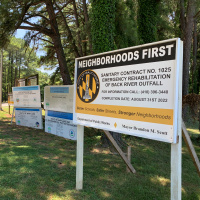
06/06/2023 Duração: 26minWhen two wastewater treatment facilities in Baltimore, Maryland, broke down in early 2021, the surrounding waterways began filling up with sewage. In this episode of Stereo Chemistry, C&EN business reporter Craig Bettenhausen takes the pod to visit the Back River Plant and Patapsco Plant in the Chesapeake Bay watershed to demystify how these facilities treat wastewater and take a deep dive into the chemistry behind enhanced nutrient removal systems. Chemical engineers, environmental advocates, and infrastructure experts explore what happens to aquatic ecosystems when wastewater treatment systems fail–and share their perspectives on reimagining wastewater as a chemical treasure trove in the future. Listen to our bonus episode with Kerri Jansen here: cenm.ag/jansen-podcast A transcript of this episode is available at https://cenm.ag/treatment. Credits Producers: Ariana Remmel, Kerri Jansen; Writer: Craig Bettenhausen; Audio editor: Mark Feuer DiTusa; Story editors: Ariana Remmel, Gina Vitale, Chris Gorski,
-
![Bonus: Executive producer Kerri Jansen hands over the mic]()
Bonus: Executive producer Kerri Jansen hands over the mic
30/05/2023 Duração: 20minStereo Chemistry’s longtime host Kerri Jansen is stepping down from her role as executive producer of the podcast. Jansen has been with Stereo Chemistry since it began in 2018, and has played an integral role in the production of C&EN’s flagship podcast. In this bonus episode, Jansen talks with C&EN’s interim coeditors for audio & video, Ariana Remmel and Gina Vitale, about some of her favorite episodes from the Stereo Chemistry archives. Subscribe to Stereo Chemistry now on Apple Podcasts, Spotify, or wherever you listen to podcasts. A transcript of this episode is now available at https://cenm.ag/jansen-podcast. Listen to some of Kerri’s favorite Stereo Chemistry episodes: How helium shortages have changed science Lithium mining’s water use sparks bitter conflicts and novel chemistry Nobel laureates Frances Arnold and Jennifer Doudna on prizes, pandemics, and Jimmy Page A world without Rosalind Franklin Why chemists are excited by exascale computing There’s more to James Harris’s story Credits P
-
![CEN Uncovered: The battle for Lake Maurepas]()
C&EN Uncovered: The battle for Lake Maurepas
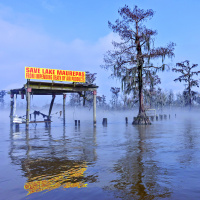
16/05/2023 Duração: 13minCarbon capture and sequestration is the trapping of CO2 emitted by industrial processes and depositing it beneath the Earth’s surface. Spurred on by tax credits offered by recent federal legislation, companies are racing to implement the technology in geologically suitable locations such as in Louisiana.However, the community around Lake Maurepas, Louisiana, has resisted efforts by Air Products to greenlight such a project under the lake. In this episode, C&EN reporters Craig Bettenhausen and Rick Mullin discuss the fears of the community around the implementation of carbon capture and sequestration around Lake Maurepas and the response from Air Products.C&EN Uncovered, a new project from C&EN’s podcast, Stereo Chemistry, offers another look at subjects from recent cover stories. Read Mullin’s April 2nd, 2023, cover story about carbon capture and sequestration around Lake Maurepas at https://bit.ly/3W4lbCE. A transcript of this episode will be available soon at cen.acs.org. Credits Ex
-
![CEN Uncovered: Lithium iron phosphate comes to North America]()
C&EN Uncovered: Lithium iron phosphate comes to North America
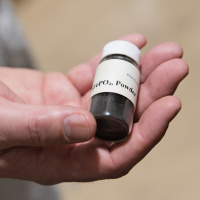
21/03/2023 Duração: 17minLithium iron phosphate (LFP) batteries are cheaper, safer, and longer lasting than batteries made with nickel- and cobalt-based cathodes. In China, the streets are full of electric vehicles using this technology. But LFP never caught on as a chemistry for electric vehicle batteries in North America. In this episode, C&EN reporters Craig Bettenhausen and Matt Blois talk about the promise and risks of bringing lithium iron phosphate to a North American market.C&EN Uncovered, a new project from C&EN’s podcast, Stereo Chemistry, offers another look at subjects from recent cover stories. Read Blois’s Jan. 30, 2023, cover story about lithium iron phosphate at http://bit.ly/3nbMkpK. A transcript of this episode is available at https://bit.ly/3lzGtKy. CreditsExecutive producer: Kerri JansenC&EN Uncovered host: Craig BettenhausenCover story reporter: Matt Blois Audio editor: Mark Feuer DiTusaStory editor: Michael McCoyCopyeditor: Sabrina AshwellShow logo design: William A. LudwigEpisode artwork
-
![Microplastics pollute our drinking water: What are the risks?]()
Microplastics pollute our drinking water: What are the risks?
21/02/2023 Duração: 27minResearchers reported finding microplastics in drinking water nearly 5 years ago, prompting California lawmakers to require monitoring of the state’s drinking water for the tiny particles. But in 2018, there were no standard methods for analyzing microplastics. So California regulators reached out to chemists and toxicologists from all sectors to develop those methods. They also sought assistance in developing a health-based limit to help consumers understand what the monitoring results mean for their health. In this episode of Stereo Chemistry, we will hear from some of the scientists leading those groundbreaking efforts. A transcript of this episode is available at https://bit.ly/41g6uPa. Credits Executive producer/host: Kerri Jansen Writer: Britt Erickson Audio editor: Mark Feuer DiTusa Story editors: Jyllian Kemsley, Michael McCoy, Ariana Remmel Audience editor: Dorea I. Reeser Copyeditor: Sabrina Ashwell, Heather Holt Logo design: William A. Ludwig Episode artwork: Shutterstoc
-
![CEN Uncovered: What exascale computing could mean for chemistry]()
C&EN Uncovered: What exascale computing could mean for chemistry
31/01/2023 Duração: 17minAt Oak Ridge National Laboratory, a supercomputer named Frontier has broken the exascale computing barrier, meaning it can calculate more than a million trillion floating-point operations per second. In this episode, C&EN reporters Craig Bettenhausen and Ariana Remmel discuss how Frontier works and what that kind of power could mean for computational chemistry.C&EN Uncovered, a new project from C&EN’s podcast, Stereo Chemistry, offers a deeper look at subjects from recent cover stories. Read Remmel’s Sept. 5, 2022, cover story about exascale computing at https://bit.ly/3RkPjr6. A transcript of this episode is available at https://bit.ly/3HNK1S0. Credits Stereo Chemistry executive producer: Kerri Jansen C&EN Uncovered host: Craig Bettenhausen Audio editor: Mark Feuer DiTusa Copyeditor: Sabrina J. Ashwell Additional review: Dorea Reeser, Manny I. Fox Morone, Michael Torrice Episode artwork: Matt Chinworth Music: "Hot Chocolate" by Aves Contact Stereo Chemistry: Tweet at us at @cenmag or email
-
![Bonus: Carolyn Bertozzi and Barry Sharpless reflect on winning the 2022 Nobel Prize in Chemistry]()
Bonus: Carolyn Bertozzi and Barry Sharpless reflect on winning the 2022 Nobel Prize in Chemistry
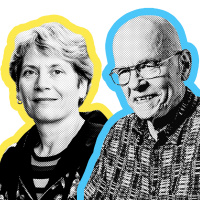
06/12/2022 Duração: 12minIn this bonus episode of C&EN’s Bonding Time, we hear from 2022 chemistry Nobel laureates Carolyn Bertozzi and K. Barry Sharpless, who shared the prize along with Morten Meldal for their work on click chemistry and bioorthogonal chemistry. After a November symposium honoring the US-based Nobel awardees at the Embassy of Sweden in Washington, DC, the two chemists discussed their long history of collaboration, how winning the 2022 Nobel Prize in Chemistry has changed their lives, and how they hope to use the spotlight to break down barriers within science. A transcript of this episode is available at bit.ly/3BiU3GZ. To learn even more about this year's Nobel-winning science, listen to our October bonus episode about the prize at bit.ly/3iJ1iSc. Credits Executive producer/host: Kerri Jansen Writer: Gina Vitale Audio editor: Mark Feuer DiTusa Story editor: Michael Torrice Copyeditor: Sabrina Ashwell Logo design: William A. Ludwig Episode artwork: Laura Morton (Bertozzi); Sandy Huffaker (Sharpless)/C&EN Mu
-
![BONUS: Click and bioorthogonal chemistry win Nobel Prize in Chemistry]()
BONUS: Click and bioorthogonal chemistry win Nobel Prize in Chemistry
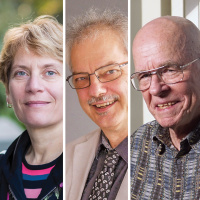
05/10/2022 Duração: 09minThe 2022 Nobel Prize in Chemistry was awarded to Carolyn Bertozzi, Morten Meldal and K. Barry Sharpless for their development of click and bioorthogonal chemistry which are used by chemists around the world to track biological processes and produce pharmaceuticals. In this special episode of Stereo Chemistry, hosts Gina Vitale and Ariana Remmel delve into the science behind the prize and talk with organic chemist Antoni Riera to discuss the applications of the award-winning chemistry. C&EN contributor Mark Peplow also joins the Stereo Chemistry crew to talk about his conversation with Nobel Laureate Carolyn Bertozzi. Read more about this award-winning science in Mark Peplow's article about the 2022 Nobel Prize in Chemistry: https://cen.acs.org/people/nobel-prize/Click-and-biorthogonal-chemistry-win-2022-Nobel-Prize-in-Chemistry/100/web/2022/10 A transcription of this episode is available at https://cenm.ag/nobelpod22. CORRECTION: On Oct. 6, 2022, part of this episode was rerecorded to correct an error
-
![Lithium mining’s water use sparks bitter conflicts and novel chemistry]()
Lithium mining’s water use sparks bitter conflicts and novel chemistry
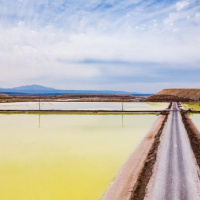
13/09/2022 Duração: 35minReplacing gas cars with electric ones is a main pillar of plans to fight climate change. But the lithium-ion batteries used in electric cars come with a cost. Communities near the Salar de Atacama in Chile, where about a quarter of the world’s lithium is extracted from salty aquifers, say mining companies pose a serious threat to the local environment and their access to water. Mining companies strongly dispute those claims. In this episode of Stereo Chemistry, we’ll explore the environmental factors at play in the salar and the differing perspectives on how best to measure impact. And we’ll hear from a new group of mining start-ups that claim they can use chemical methods—as yet unproven—to extract lithium without the same impact on water. This is the first episode in a new series exploring the future of water. A transcript of this episode, along with English translations of all Spanish dialogue, is available at bit.ly/3QGlQpu. Sign up for C&EN’s email series “Advancing in the Art of Science Communicat