Informações:


Sinopse
Stereo Chemistry is chemistry news told by the people making it. C&EN is the news magazine of the American Chemical Society.
Episódios
-
![Ep. 37: Historians pursue centuries-old chemical secrets—Green reading glass, Bologna stones, and Greek fire]()
Ep. 37: Historians pursue centuries-old chemical secrets—Green reading glass, Bologna stones, and Greek fire
19/01/2021 Duração: 24minResearchers want to invent the technologies of the future, but there are plenty of chemical questions lurking in the past. In this episode of Stereo Chemistry, C&EN assistant editor Gina Vitale joins host Kerri Jansen to explore the centuries-old secrets and nagging mysteries that keep science historians up at night—and how these researchers go about solving them. A script and additional resources are available at bit.ly/3qGGHg5. Sign up for C&EN’s Grad Student Survival Guide at cenm.ag/gradsurvivalguide. Image credit: Marjolijn Bol/Lawrence Principe/John Haldon
-
![Ep. 36: How will Biden’s election impact chemistry?]()
Ep. 36: How will Biden’s election impact chemistry?
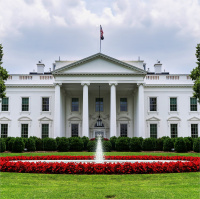
15/12/2020 Duração: 16minAs we prepare for a new US president, many chemists are wondering how the administration change may affect them and their work. Will President-Elect Joe Biden change immigration policies that have reduced the number of foreign students studying at US universities? How might scientific integrity standards in the federal government change under the Biden-Harris team? And will this administration grant the chemical industry’s wish to stop the trade war with China and other US trading partners? In this episode of Stereo Chemistry, C&EN policy reporter Cheryl Hogue joins host Kerri Jansen to help orient listeners to how a Biden administration is likely to impact the world of chemistry. A script for this episode is available at bit.ly/37oPYT9. Find all C&EN’s COVID-19 coverage at cenm.ag/coronavirus. Make a donation to support C&EN’s nonprofit science journalism at cenm.ag/donate. Image credit: Luca Perra/Shutterstock
-
![Ep. 35: Grad students, lab injuries, and workers’ compensation—it’s complicated]()
Ep. 35: Grad students, lab injuries, and workers’ compensation—it’s complicated
17/11/2020 Duração: 24minMany grad students may be surprised to learn their university’s policies for reimbursing medical fees for lab injuries do not cover grad students, or cover grad students only under certain circumstances. And it can be hard to get clarity on what is and is not covered. That’s left some grad students in an uncomfortable limbo of seeking answers after they’ve already racked up thousands of dollars in bills for an injury in the lab. In the latest episode of Stereo Chemistry, we uncover the source of this confusion and ask what—if anything—grad students can do about it. A script for this episode is available at https://bit.ly/3kMwE5O. Read C&EN’s cover story, "Who pays when a graduate student gets hurt?" at bit.ly/2INB4M5. Sign up for the Grad Student Survival Guide at cenm.ag/gradsurvivalguide. Image credit: danielfela/Shutterstock
-
![Ep. 34: Chemists confront the helium shortage]()
Ep. 34: Chemists confront the helium shortage
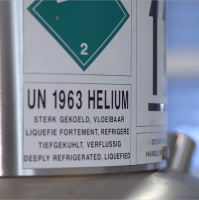
21/10/2020 Duração: 26minHelium shortage 3.0 is winding down. But 2021 is likely to bring more changes to the global market for this critical, non-renewable gas. And even if there isn’t another crunch, scientists who use helium are tired of unstable supply of a material they need to keep their instruments running. In this episode of Stereo Chemistry, we’ll look at what’s behind the wobbly helium market and what scientists and instrument makers are doing to lift the heavy burden of helium use. A script for this episode is available at bit.ly/34nmunf. Find all of C&EN’s COVID-19 coverage at cenm.ag/coronavirus. Make a donation to support C&EN’s nonprofit science journalism at cenm.ag/donate. Image courtesy of Bruker BioSpin
-
![Ep. 33: On being #BlackInChem]()
Ep. 33: On being #BlackInChem
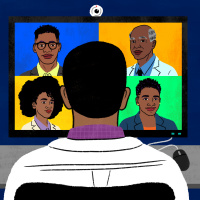
23/09/2020 Duração: 24minIn August 2020, Black chemists and allies took to Twitter to celebrate the inaugural #BlackInChem week. The social media campaign highlighted the diversity and accomplishments of Black chemists at all stages of their career and also created space for candid discussions about the discrimination these scientists face in chemistry. In the latest episode of Stereo Chemistry, host Kerri Jansen and reporter Ariana Remmel hear from Black chemists from a variety of disciplines across academia and industry about the current state of diversity, equity, and inclusion in the chemical sciences and what non-Black allies can do to support Black chemists. Update 11/24/20: In response to listener feedback, C&EN has added an editor's note to this episode. View the note at bit.ly/361aFUR Sign up for C&EN’s newsletter at bit.ly/chemnewsletter 9 Black chemists you should know about: bit.ly/2FioR0l More resources and a script for this episode are available at bit.ly/361aFUR Image credit: Daniel Fishel
-
![Ep. 32: Should organic chemistry’s name reactions go the way of mouth pipetting?]()
Ep. 32: Should organic chemistry’s name reactions go the way of mouth pipetting?
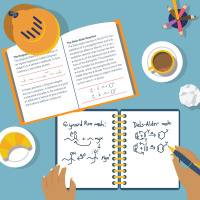
19/08/2020 Duração: 26minScientists have been naming ideas, theorems, discoveries, and so on after other scientists for a very long time (Newton’s laws of motion, anyone?). Chemists are no different. They’ve been naming reactions after each other since about the early to mid 1800s. Nowadays, organic chemists in particular use them as a kind of shorthand. However, because the majority of name reactions honor white men, some organic chemists wonder if using these names is exclusionary. In the latest episode of Stereo Chemistry, host Kerri Jansen and reporter Leigh Krietsch Boerner hear from a plethora of organic chemists on how reactions get named, who they’re named after, and whether the practice should stop. A script of this episode is available at bit.ly/3kU3enk. Share your thoughts with us on Twitter! Tweet at us @cenmag, @absoluteKerri, and @LeighJKBoerner, using the hashtag #namereactions. View the Twitter thread that inspired this episode at bit.ly/34a2dS6. Read about the 2020 class of C&EN’s Talented 12 at cenm.ag/T12. Re
-
![Ep. 31: A world without Rosalind Franklin]()
Ep. 31: A world without Rosalind Franklin
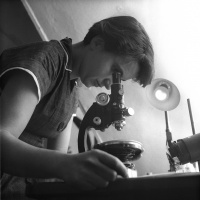
22/07/2020 Duração: 23minRosalind Franklin and her lab assistant famously imaged the structure of DNA using X-ray crystallography, an achievement that directly facilitated James Watson and Francis Crick’s discovery of the double helix. For what would be Rosalind’s 100th birthday, the Stereo Chemistry team consults scientists and historians to envision the many ways the world might be different without the now-famous Photograph 51. Listen to the Distillations episode “Science on TV” at bit.ly/30yjZuU. A script of this episode is available at bit.ly/3hqR9Uf. Image credit: Henry Grant Collection/Museum of London
-
![Bonus episode: Talking TSCA—is the chemical law living up to expectations?]()
Bonus episode: Talking TSCA—is the chemical law living up to expectations?
17/06/2020 Duração: 17minThis month marks 4 years since the Toxic Substances Control Act, or TSCA, was revised to boost confidence in chemical safety in the US by strengthening regulations. The updated law gave the Environmental Protection Agency sweeping new authority to ensure that the tens of thousands of chemicals in everyday products do not pose unreasonable risks to human health and the environment. In this bonus episode of Stereo Chemistry, host Kerri Jansen and C&EN senior reporter Britt Erickson examine how the EPA is using that authority to evaluate new chemicals before they hit the market and to assess the risks of chemicals that have been in use for decades. Is the EPA protecting public health by sufficiently evaluating the risks of chemicals, or is it giving industry a free pass to market chemicals with little toxicity data? A script of this episode is available at bit.ly/2UTlD8F. Image credit: Barry Barnes/Shutterstock
-
![Ep. 30: The chemical culprit in 2019s mysterious vaping illnesses—what we still dont know]()
Ep. 30: The chemical culprit in 2019's mysterious vaping illnesses—what we still don't know
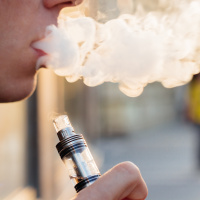
27/05/2020 Duração: 29minMonths before the novel coronavirus took hold of the globe in late 2019, clusters of patients began appearing in emergency rooms throughout the US with a mysterious lung disease. Investigators quickly linked the illnesses not to a pathogen, but to patients’ use of vaping products. By examining the chemicals in these products, they eventually found a chief suspect: vitamin E acetate. The compound was being used as a cutting agent in some counterfeit or illicit cannabis-based vaping products. Still, many questions remain about how vitamin E acetate could have caused those injuries and whether it was acting alone. In this episode of Stereo Chemistry, host Kerri Jansen and C&EN senior reporter Britt Erickson sift through the complicated chemistry of vaping and explore some new evidence in the investigation. They’ll also discuss how the tragic events of last summer could prove to be a wake-up call for chemical regulators as they evaluate vaping products. A script of this episode is available at bit.ly/2ZJ1JjW.
-
![Ep. 29: This virus is here now, its going to stay with us]()
Ep. 29: This virus is here now, it's going to stay with us
01/05/2020 Duração: 35minAs COVID-19 continues to spread, so does the effort to treat and vaccinate against the novel coronavirus that causes the disease. Around the world, scientists are working nonstop on the different therapies that they hope will quell the loss of life during this pandemic while, at the same time, setting us up to prevent future outbreaks. What’s not clear is which, if any, of these treatments will work. Much about SARS-CoV-2 remains unknown. In this episode of Stereo Chemistry, we dig into the efforts to beat the novel coronavirus and why, in some cases, it’s like throwing spaghetti up against the wall to see what sticks. Image credit: NIAID-RML
-
![Bonus episode: That just isn’t how you land on the moon without crashing]()
Bonus episode: That just isn’t how you land on the moon without crashing
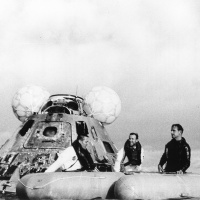
10/04/2020 Duração: 14minFifty years ago this week, an explosion on the Apollo 13 moon mission stranded three astronauts hundreds of thousands of miles from home. You probably know that Fred Haise, Jim Lovell, and Jack Swigert made it home safely (water landing shown, with two of the astronauts in white). You may not know the chemist behind the rocket engine that saved them, which began its life as an apparatus for measuring chemical reaction rates. This bonus episode of Stereo Chemistry tells the story of the engine’s design with help from two of the people who created it. Listen now to a tale that starts with an explosion and ends with SpaceX’s pioneering reusable rockets, with one small step for a man along the way. CORRECTIONS: This episode was updated on April 15, 2020, to reflect that Fred Haise, not Ken Mattingly, flew aboard Apollo 13. On April 22, 2020, this podcast description was also corrected to reflect Haise's role and clarify that the photo shows only two of the astronauts. To learn more about the chemistry of rocke
-
![Ep. 28: So thats why we threw a robot into the back of a truck]()
Ep. 28: So that's why we threw a robot into the back of a truck
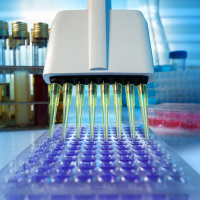
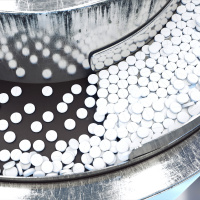
18/03/2020 Duração: 35minChemistry is going the way of computing: It’s getting smaller and faster. High-throughput experimentation, or HTE, is part of this push. Borrowing from biologists and biochemists, HTE has brought in microplates and multichannel pipettes to miniaturize reactions, as well as robots to run those reactions rapidly without sacrificing precision. But it’s also been around for decades. So why are so many in the field excited about HTE right now? Stereo Chemistry looks at the technology and culture shift behind the current buzz. See more at cenm.ag/showmetherobots. Nominate an amazing early-career chemist for our annual Talented 12 feature at cenm.ag/t12nom Photo credit: Shutterstock
-
![Bonus episode: We’re watching it very closely]()
Bonus episode: We’re watching it very closely
10/03/2020 Duração: 14minAs the novel coronavirus responsible for causing COVID-19 continues to spread, questions about the virus, the disease, and its impacts on our daily lives mount. To help you stay current with the science, policy, and business implications of this outbreak, C&EN has made all of its coronavirus coverage freely available at cenm.ag/coronavirus. And in the latest bonus episode of Stereo Chemistry, we discuss one of the largest questions on the business front: How is the coronavirus affect-ing the global drug supply? UPDATE: This podcast was updated on March 18, 2020 to help ensure listeners are aware of the podcast's original publication date (March 10). Image credit: Shutterstock
-
![Bonus episode: We saw a lot of that scientific sage savior syndrome]()
Bonus episode: We saw a lot of that scientific sage savior syndrome
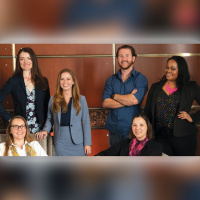
20/02/2020 Duração: 14minStereo Chemistry talked with six chemists who spent a year in Washington on a policy fellowship to find out what they learned and what advice they would give to other scientists who are interested in science policy. Check out Andrea Widener’s AAAS policy fellows story on C&EN at https://cen.acs.org/policy/Lessons-learned-from-a-year-in-Washington/98/i4. And learn more about the AAAS Science and Technology Policy Fellowship at https://www.aaas.org/programs/science-technology-policy-fellowships. Photo credit: James Kegley
-
![Ep. 27: The earth is going to be fine what we’re saving is ourselves]()
Ep. 27: The earth is going to be fine; what we’re saving is ourselves
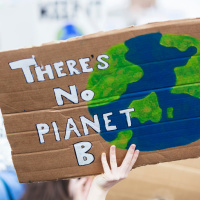
10/02/2020 Duração: 26minClimate change is on the public’s mind, thanks in no small part to the efforts of Swedish activist Greta Thunberg and protests and rallies involving young people around the world. In the latest episode of Stereo Chemistry, host Kerri Jansen talks to early-career researchers developing the tools and knowledge we’ll need to thrive in a changing climate. These scientists are part of a generation who will experience the effects of climate change throughout their lifetimes. They share what drew them to climate science and what keeps them motivated when the questions—and the obstacles—are so vast. A script of this episode is available at cen.acs.org/environment/climate-change/Podcast-5-climate-scientists-share/98/i6 Read C&EN’s special issue on climate change adaptation at cenm.ag/adapt Image credit: Ink Drop/Shutterstock
-
![Bonus episode: Its this big, giant brouhaha of pharmaceutical companies]()
Bonus episode: It's this big, giant brouhaha of pharmaceutical companies
03/02/2020 Duração: 10minM&A, the FDA, and an empty elevator. In this bonus episode, C&EN reporters Ryan Cross and Megha Satyanarayana share their takeaways from their time at the J.P. Morgan Healthcare conference a few weeks ago. Read more about JPM 2020 here: https://cen.acs.org/business/investment/JP-Morgan-Healthcare-Conference-slow/98/i3 Image credit: Credit: Megha Satyanarayana/C&EN
-
![Ep. 26: Evolution is kind of the be all end all in the problem of influenza]()
Ep. 26: Evolution is kind of the be all end all in the problem of influenza
31/01/2020 Duração: 33minAlthough the Wuhan coronavirus is currently dominating headlines across the globe, influenza kills hundreds of thousands of people worldwide each year. In the US, millions of people roll up their sleeves annually for a flu shot. But this ritual is confusing for many. Why is it that most vaccines are effective for a lifetime while the flu vaccine is only effective for a year? And why do we sometimes get the flu even when we’ve gotten the vaccine? The answer is evolution: the flu is constantly evolving to evade our immune systems. In this episode of Stereo Chemistry, scientists who study flu evolution and pandemics explain what makes fighting the flu so difficult. For more, visit cenm.ag/flucast. Image credit: US Army photographer
-
![Bonus episode: All this is happening at Northvolt speed]()
Bonus episode: All this is happening at Northvolt speed
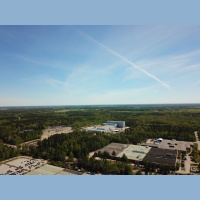
22/01/2020 Duração: 11minLate last year, C&EN contributing editor Mark Peplow toured a new battery company’s R&D facility in Sweden. That company, called Northvolt, aims to produce the world’s greenest lithium-ion batteries, to help meet the growing demand for electric vehicles. Ride along with Mark to learn more about the company, its work, and its goals in the first bonus episode of Stereo Chemistry. Check out Mark's full story for C&EN here: https://cen.acs.org/energy/energy-storage-/Northvolt-building-future-greener-batteries/97/i48 Image credit: Northvolt
-
![Ep. 25: It was like, bam, half the ozone layer over Antarctica is gone]()
Ep. 25: It was like, bam, half the ozone layer over Antarctica is gone
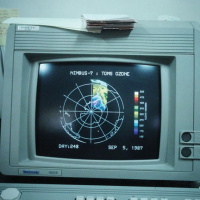
20/12/2019 Duração: 25minThe discovery of the ozone hole in the mid-1980s sent shock waves through the scientific community and society at large. As scientists scrambled to make sense of the unprecedented phenomenon, a clear culprit emerged. Chlorofluorocarbons (CFCs)—once thought of as near-miraculous compounds that revolutionized refrigeration—were suddenly revealed to be one of the biggest environmental dangers known to humankind. What followed was an international push by scientists, media, and policy makers to ban CFCs. In October 2019, NASA announced the ozone hole is the smallest recorded since 1982. In this episode of Stereo Chemistry, we hear from some of the scientists who were instrumental in discovering—and helping heal—the ozone hole and who think lessons learned could help us fight climate change. A script of this episode is available here. To read more from C&EN on hot trends in chemistry, check out our 2019 Year in Chemistry issue at cenm.ag/yic2019. Image credit: D. Murphy/NOAA
-
![Ep. 24: Kids are happy to get to ask whatever they want]()
Ep. 24: Kids are happy to get to ask whatever they want
26/11/2019 Duração: 23minFor its latest episode, Stereo Chemistry handed its recorders over to kid journalists interviewing grown-up chemists about cutting-edge research. Listen in as the children get answers to questions about DNA, environmental clean-up, and even C-H activation. The kids’ reporting was part of an outreach event called Science Storytellers that took place during the American Chemical Society National Meeting in San Diego in August. Science Storytellers empowers kids to ask questions as they interact, one-on-one, with real scientists. In this episode, you’ll hear from the creator of the Science Storytellers program, Jenny Cutraro, to learn how this outreach activity is designed to break down barriers between scientists and the public. For a full transcript and additional resources, visit our website. And here's our Facebook Live event from the ACS Kid Zone.